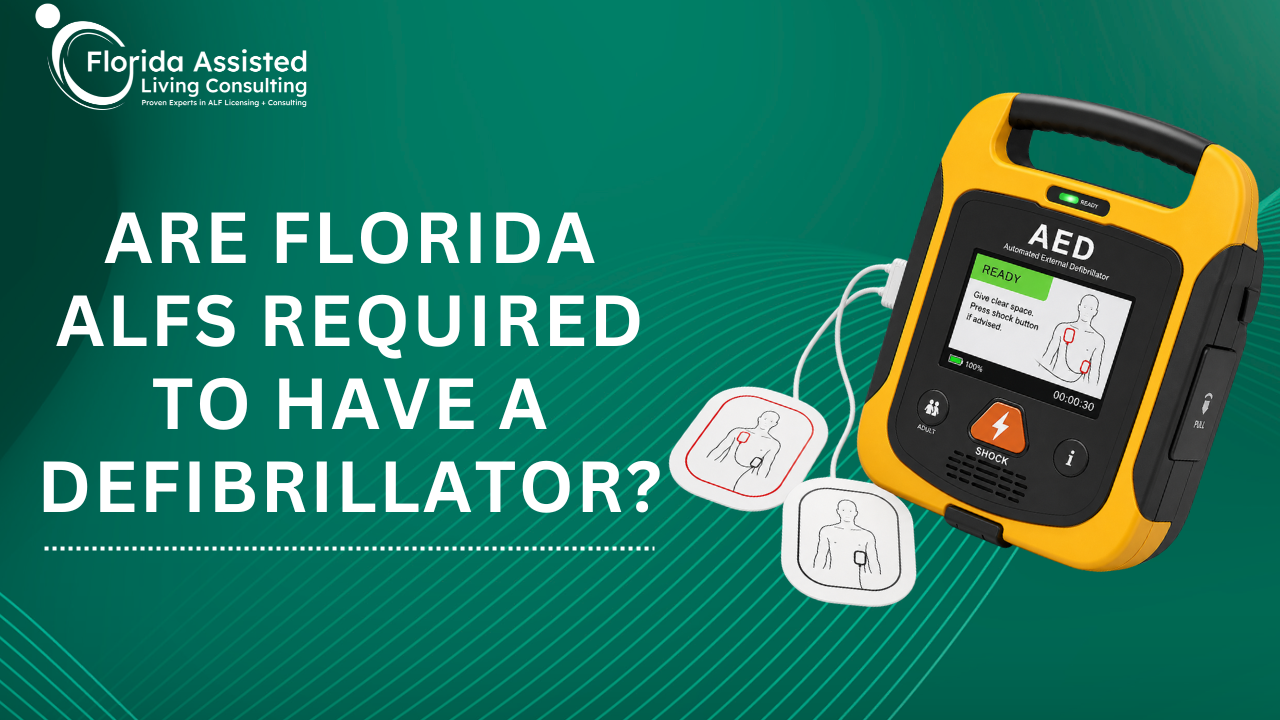
Are Florida ALFs Required to Have a Defibrillator?
Jul 02, 2026Emergency readiness is not just a plan sitting in a binder. In a Florida ALF, emergency care requirements can include equipment that has to be available on the premises. One important example is the automated external defibrillator, commonly called an AED.
Florida law does not require every small assisted living facility to have an AED. The requirement becomes mandatory once the facility reaches a certain licensed bed size. Owners planning how to open an ALF in Florida should understand this rule before choosing capacity, planning operations, or preparing for inspections.
When is an AED required in a Florida ALF?
Under Florida Statute 429.255, an assisted living facility licensed under Part I of Chapter 429 with 17 or more beds must have a functioning automated external defibrillator on the premises at all times.
So the licensed bed count is what triggers the rule. A smaller six-bed ALF may not fall under the AED requirement, but a facility with 17 or more licensed beds does. Confirm the licensed capacity, and do not assume the rule is based only on the number of residents currently living in the facility. This is also a capacity-planning decision worth making on purpose. If you are deciding between a 16-bed and a 17-bed license, understand that crossing that line adds a mandatory equipment and readiness obligation, not just one more bed of revenue.
What does functioning mean in practical terms?
The statute uses the phrase functioning automated external defibrillator. Treat that as an ongoing responsibility, not a one-time purchase. The AED should be accessible, maintained, checked according to the manufacturer's instructions, and kept with usable pads and batteries. The device itself is defined in Florida Statute 768.1325, the Cardiac Arrest Survival Act, which also provides civil-liability protections for using an AED in good faith during an emergency.
Staff also need to know where the AED is and what to do in an emergency. Equipment locked in a closet, expired, or unknown to staff defeats the purpose of the requirement. Build the AED into your training so new hires learn its location and basic use during orientation, and put it on a monthly readiness check alongside your other safety equipment. Pads and batteries expire, and a device that fails when a resident collapses is treated the same as not having one at all.
Should the AED location be registered?
Florida Statute 429.255 says the facility is encouraged to register the location of each automated external defibrillator with a local emergency medical services medical director. That is not worded as strictly as the mandatory requirement for facilities with 17 or more beds, but it is still a smart emergency-readiness step.
Registration helps local emergency response systems know where AEDs are located. Each facility should check with its local EMS or county emergency medical services contact for any local process or recommendation.
Does having an AED replace calling 911?
No. An AED is emergency equipment, not a replacement for emergency medical services. Staff should still follow the facility's emergency procedures, call 911 when appropriate, and provide care within the scope allowed by law and training.
Florida Statute 429.255 also addresses emergency care by licensed personnel. In an emergency, licensed personnel may carry out their professional duties until emergency medical personnel assume responsibility for care.
What about do-not-resuscitate orders?
The same statute states that facility staff may withhold or withdraw cardiopulmonary resuscitation or the use of an AED if presented with a do-not-resuscitate order executed pursuant to Florida Statute 401.45. This is a serious area and has to be handled according to law, agency rules, facility policy, and proper documentation.
A facility should never casually treat a resident's spoken wish or a family statement as a valid order. Know exactly what documentation is required and how staff should respond in an emergency. If you want a second set of eyes on your emergency and DNR policies, an ALF licensing consultation with Carline is a good place to start.
Why this matters for owners
AED compliance is part of a larger emergency-preparedness culture. Think about staff training, emergency drills, posted procedures, incident response, resident records, and how fast staff can act in a crisis. Emergency equipment is one of the things that shows up during an AHCA inspection checklist for Florida ALFs walkthrough, and it is worth pressure-testing with an AHCA inspection and mock survey.
If your facility has 17 or more beds, the AED requirement belongs on your opening checklist and your ongoing compliance calendar. If your facility is smaller, emergency readiness still matters, even when the specific AED requirement may not apply. You can review the state's licensing and emergency expectations directly through the AHCA Assisted Living unit.
Do Not Start With Guesswork
If you are serious about opening an Assisted Living Facility in Florida, do not start with guesswork. Get access to our free resources for future ALF owners so you can begin learning the licensing steps, compliance expectations, and common mistakes to avoid.
Review Emergency Readiness Before Submission
If your next step is getting your application package and operational systems reviewed before submission, that is exactly what an initial license and application review is built for. It catches the issues that cause delays, emergency-care requirements included, before AHCA does.