

Hurricane Isaias moved through Florida this past week, and if you're reading this, you're probably still in cleanup mode, or checking in on someone who is.
The days right after a storm are when the real risk shows up. Not the wind. The fallen tree nobody's dealt with yet. The medication count nobody's checked. The parent who says "we're fine" and isn't.
So this week, instead of a licensing or marketing topic, here's what to actually do right now, whether you run a licensed facility, you're caring for an aging parent, or both.
If You Operate a Licensed Facility in the Storm Area
If your facility is in the Panhandle, Big Bend, Citrus, or Levy County area, there's a reporting step a lot of owners don't know about until they're standing in the middle of it.
- Report through AHCA's Health Facility Reporting System (HFRS). If your county was in the activated storm area, this isn't optional, and it isn't the same as calling your local office to say you're fine. The system is how the state tracks which facilities need help and which ones are clear.
- Don't assume you're fine to reopen without checking. If your building took on water, lost power for an extended stretch, or has structural damage, re-entry and resuming full operations may need to go through inspection first. When in doubt, call before you move residents back in.
- If you're not sure whether your facility needs to report, call AHCA's Assisted Living Unit directly: 850-412-4304. A five-minute call now is a lot cheaper than explaining later why you didn't.
Carline walks through this in more detail in her video, "How to Prepare for a Hurricane in Florida (Assisted Living)".
Two Safety Reminders That Still Save Lives After the Storm Passes
These sound basic until someone gets hurt by skipping them.
- Generators belong at least 20 feet from doors and windows, and never in a garage, attached or not. Carbon monoxide doesn't announce itself.
- Stay away from downed power lines and standing water. Water that's touched a downed line is still live. Assume every line is active until a utility crew says otherwise.
If you're a family caregiver and your parent has a generator running right now, this is worth a phone call today, not a "someone will mention it eventually."
If You're Caring for an Aging Parent Through the Aftermath
This part doesn't make the news, but it's where caregivers tell us the most goes wrong.
- Check the medication supply, not just the pharmacy's hours. Storms close pharmacies and disrupt refill schedules. If your parent is within a week of running out of anything, that's today's errand.
- Watch for quiet decline, not just obvious injury. Routine is what keeps a lot of older adults steady. A missed meal schedule, a disrupted sleep pattern, or a few days without their usual visitors can show up as confusion, irritability, or withdrawal that looks unrelated to the storm but isn't.
- Heat is the hidden danger after power loss. Florida without air conditioning for even a day or two is a real risk for anyone older or on certain medications. If they're without power, don't wait for them to tell you it's a problem.
- "We're fine" deserves a follow-up question. Ask what they ate today. Ask when the power came back. Ask if they've left the house. Specific questions get honest answers in a way "are you okay?" doesn't.
Resources Worth Saving, Not Just Reading
Keep this list somewhere you can find it, because you may need more than one of these this week.
- State Assistance Information Line: 1-800-342-3557
- 211 (non-emergency help, shelters, local resources): 211
- FPL power outage reporting: 1-800-468-8243
- Florida Insurance Consumer Helpline: 1-877-693-5236
- Price-gouging hotline: 1-866-966-7226
- Florida Elder Helpline: 1-800-963-5337
- Disaster Distress Helpline: 1-800-985-5990
- FEMA: 1-800-621-3362
The Storm Passes. The Questions Don't.
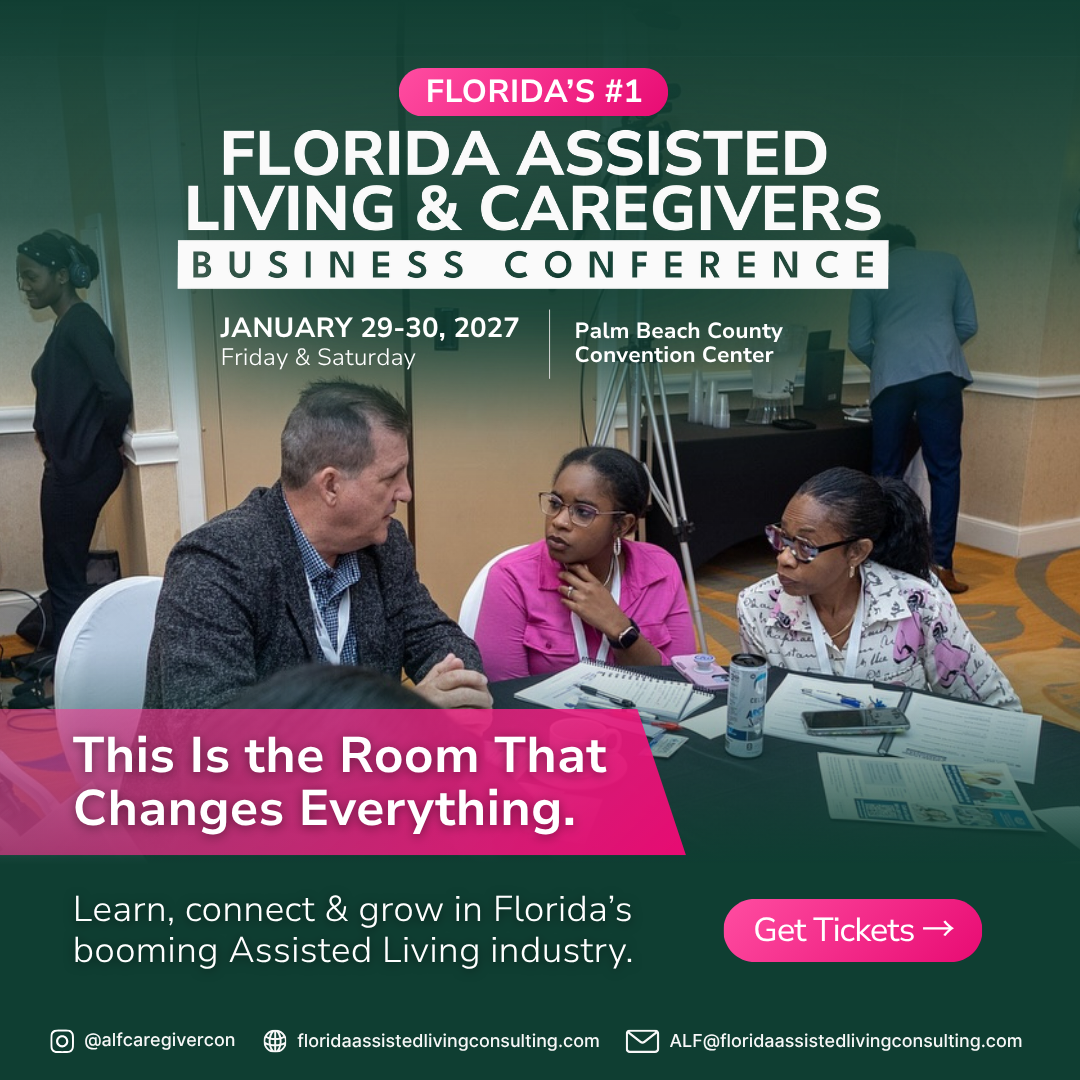
If this week taught you anything, it's that the hardest moments in this industry rarely show up on a schedule. The owners and caregivers who get through them without losing a resident, a license, or a weekend of sleep are usually the ones who already know who to call before they need to.
That's the real value of the ALF Caregivers Conference. Two days, and the room is full of exactly the people you need in a moment like this one: AHCA, elder law attorneys, lenders, other owners who've already lived through a storm season, and caregivers who've done this longer than you have. Every ticket comes with up to 9 Florida ALF continuing education hours, so the two days pay for themselves before you've even left the room.
Day three is capped at 25 people — the ALF CEO Implementation Mastermind, a separate registration, built for the owners who want to leave with a plan, not just notes.
Before You Go
Save this one. Forward it to another owner, administrator, or caregiver who needs it this week, not next month.
If you want that kind of support standing by before the next storm, the conference is where that network actually gets built. And if you've got a specific question about your facility's reporting or your parent's situation that this didn't answer, that's exactly what the Thriving Circle is for.
Take care of your residents, your parents, and yourself this week. In that order isn't always possible, but try.
With prosperity,
Carline Cadet Francois
CEO, Florida Assisted Living Consulting LLC

Responses