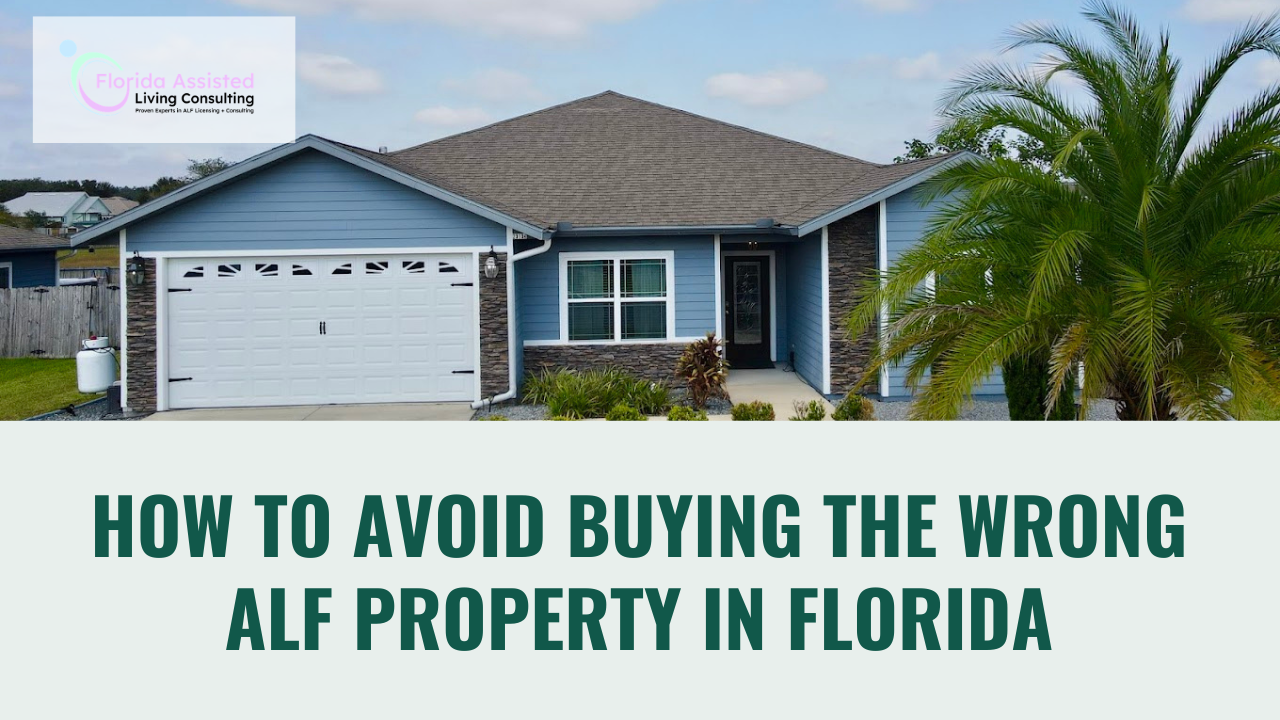
How to Avoid Buying the Wrong ALF Property in Florida
Jun 30, 2026I have watched future owners fall in love with a house before they ever confirmed it could actually work as an assisted living facility. The property looks beautiful online, the bedroom count checks every box, and everyone gets excited. Then a few months into the process, zoning pushes back, the fire marshal flags something expensive, or the health department has concerns nobody thought to ask about ahead of time.
This is one of the most expensive mistakes I see, and it is almost always avoidable. If you are still in the planning stage and figuring out how to open an ALF in Florida, the property you choose can either set you up for a smooth licensing process or create months of delay and unplanned cost. Here is how I walk future owners through evaluating a property before they commit to it.
Start With Zoning, Not the House Itself
Before you fall for a property, find out whether the city or county will actually let you operate an assisted living facility there. This is the step people skip because it is not as exciting as walking through the home, but it is the one that can end your plans the fastest.
Do not rely on what a realtor tells you, what the neighborhood looks like, or what another facility down the street is doing. Zoning decisions are made property by property, and assumptions get future owners into trouble more often than almost anything else.
If you want a head start on asking the right question the right way, we put together our ALF zoning request letter template so you are not guessing how to approach the city or county.
A Regular House Does Not Automatically Become an ALF
Sometimes a residential home can work beautifully for a small ALF. Sometimes it cannot, and the reason is rarely the house itself. It is usually something practical: not enough parking, a distance rule with a neighboring property, a bedroom layout that does not work for the number of residents you want, limited bathroom access, septic that cannot handle the load, or upgrades that cost more than the home is worth.
This is exactly why I tell people to do this homework before signing anything, not after.
Fire Safety Can Quietly Become Your Biggest Expense
Fire safety is the cost category that catches people off guard the most. A property can look move-in ready and still need a fire alarm system, sprinklers, emergency lighting, exit changes, or additional fire extinguishers before it can be licensed.
Before you commit to a property, ask what it would take to bring it up to the fire safety standard your facility type requires. A house that seemed like a great deal can turn into a very different financial picture once those upgrades are priced out.
Do Not Skip the Health Department Conversation
Kitchen setup, food storage, water source, and septic capacity all matter here. If the property has a septic system, find out whether it can actually support the number of residents you are planning for, not just the number of bedrooms. If it has a well, some counties will require water testing or additional review before you move forward.
These are the kinds of details that do not show up in listing photos, and they are exactly the kind of thing that delays a licensing file when it surfaces too late.
Think About How the Space Will Actually Work Day to Day
Walk the property and picture daily life there, not just how it looks empty. Bedroom sizes, bathroom access, hallway width, exits, stairs, ramps, laundry flow, medication storage, staff workspace, common areas, dining space, and outdoor access all affect whether the home can support real operations.
A property can check every box on paper and still be a poor fit once you picture residents, staff, and daily routines actually moving through it.
The Biggest Red Flag I See
The biggest warning sign is when a deal only works if everything goes perfectly. If your plan depends on the city approving the use without pushback, the fire inspector requiring no major upgrades, the health department raising no concerns, and the layout sailing through review, you are taking on far more risk than you realize.
A solid property plan leaves room for real review, real corrections, and a realistic budget. It should not depend on best-case scenarios lining up one after another.
Get a Second Set of Eyes Before You Buy
At minimum, confirm zoning with the local government, understand what fire safety will likely require, think through sanitation, and look at the property honestly against what licensing will demand. This is one of the places where having someone who has been through this before can save you from a very costly decision.
If you are actively reviewing a property right now, our initial license and application review can help you understand what needs a closer look before you go any further.
Get Guidance Before You Commit to the Wrong Property
Buying the wrong ALF property can set you back months, increase your startup costs, or force you to start over entirely with a different location. Before you invest in a property, get clear on zoning, inspections, layout, and what licensing will actually require.
Start with our free ALF licensing resources to get oriented, or book an ALF licensing consultation with Carline if you want help evaluating your next steps before you commit to anything.