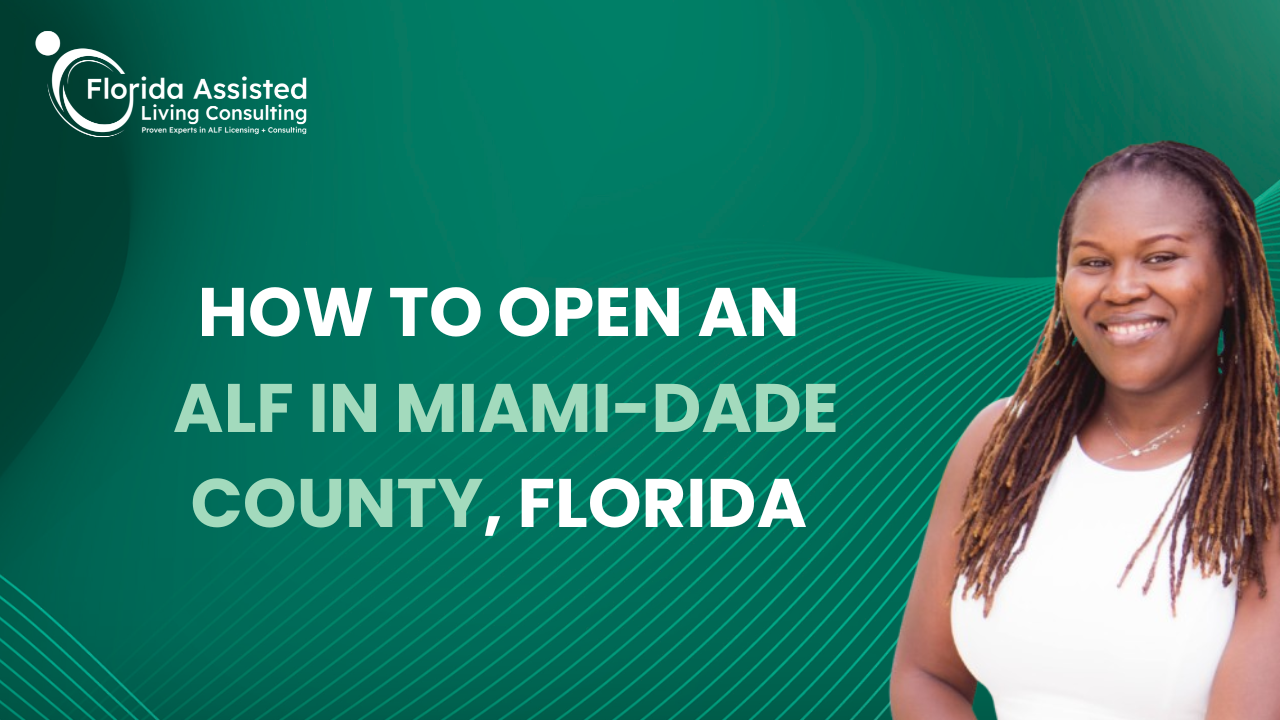
How to Open an ALF in Miami-Dade County, Florida
Oct 01, 2026Miami-Dade is not a county where I would tell someone to 'find a house, get zoning, and apply to AHCA.' For a small ALF in unincorporated Miami-Dade, the zoning process itself can start a clock. The county's current Group Home/ALF process for a maximum of six residents requires a zoning verification and 1,000-foot spacing review; if the site qualifies, the county reserves it for six months while the applicant works toward state licensing.
That six-month reservation is why sequencing matters. The operator may still need building/change-of-use work, a Certificate of Occupancy, a Certificate of Use, Environmental Health review, fire approval, and AHCA licensing. Carline's internal Miami-Dade files even include an extension-status form designed to document progress through those steps. The lesson is simple: in Miami-Dade, you need a project calendar before you need a pretty renovation plan.
The Six-Bed Unincorporated Lane Has a Spacing Reservation
Current Miami-Dade Group Home/ALF zoning guidance says an ALF in unincorporated Miami-Dade for a maximum of six persons uses the Group Home/ALF application. The county requires a zoning verification letter and confirmation that no other legally established facility is within 1,000 feet of the proposed site. The application package includes a letter of intent, owner consent, identification, and a signed/sealed spacing survey.
If the site complies, it is reserved for six months. That is not the rule for every ALF of every size and it is not a substitute for municipal zoning. Larger facilities and properties inside one of Miami-Dade's municipalities can follow a different local land-use path. Capacity and jurisdiction must be established first.
A Reservation Is Not Permission to Operate
The reservation protects the site while the applicant works through licensing. It does not mean the house is building-code ready or approved for occupancy. Miami-Dade Certificate of Occupancy and Use explains that a change of use can require a building permit and a code evaluation of egress, plumbing fixtures, ventilation, parking, and other conditions, with approvals from agencies such as DERM, Water and Sewer, Fire Rescue, and DOH as applicable.
In unincorporated Miami-Dade, the Certificate of Occupancy comes before the Certificate of Use. The CU confirms the business is allowed in the zoning district and that the structure has the proper occupancy approval. Municipal locations have a municipal CU approval path, so again, do not mix county and city instructions.
Our Miami-Dade Files Show Why Progress Documentation Matters
The internal package includes a sample Group Home application extension status update asking applicants to document when the zoning application was submitted, building/change-of-use permit progress, resubmittals, approval dates, inspections, and AHCA or other state-licensing submissions. Current county guidance says an extension request must be submitted at least 15 days before the six-month reservation expires.
That means your permitting delays are not just frustrating; they can affect the zoning reservation timeline. Keep a clean project log from day one.
Environmental Health Wants Real Plans
Our internal DOH package includes group-care, sanitation, food-facility plan-review, scaled-floor-plan, and plan-review checklist materials. The repeated theme is that the facility has to be drawn and described in enough detail for reviewers to understand rooms, fixtures, kitchen equipment, utilities, and food service.
Several internal forms are older, so I would not reuse their fee or submission instructions without checking the current DOH process. But the design lesson remains current: do not wait until the kitchen is installed to ask whether the plan review supports it.
Miami-Dade Also Has a Dedicated Healthcare Emergency-Plan System
The county's Miami-Dade healthcare CEMP portal is the current system for residential healthcare facility emergency-plan submissions. The county's service guidance describes annual CEMP/EPP submission, account setup, fee/payment requirements, and local fire-safety-plan coordination.
Because Miami-Dade is hurricane-exposed and operational continuity is a major licensing issue, I would build evacuation, transportation, emergency power, fire documentation, and plan renewal into the operating system from the beginning, not after the licensing inspection.
In Miami-Dade, Sequence Is Strategy
My six-bed unincorporated sequence would be: confirm county jurisdiction and resident count, complete the Group Home/ALF spacing and reservation process, immediately assess building/change-of-use requirements, run DOH/fire/utility review in parallel where possible, document every permit and licensing milestone, and submit the AHCA and emergency-planning work on a calendar that respects the reservation deadline.
For a larger ALF or a municipal site, reset the local zoning analysis instead of forcing the six-bed county process onto the wrong project. Miami-Dade rewards precision, and it punishes assumptions.
Since change of use drives so much of this project, review our Florida ALF construction and renovation rules, alongside the statewide framework in How to Open an ALF in Florida.
|
In Miami-Dade, the zoning clock starts before the renovation does. Use a One-on-One With Carline to work through the approval path for the actual parcel, capacity, and facility plan. For broader education and connections across Florida assisted living, reserve your place at the 2027 ALF Caregivers Conference. |