

AI is changing almost every industry—and senior care is no exception.
But when people hear "AI in caregiving," they sometimes imagine robots replacing caregivers.
That's not what I'm talking about.
I'm talking about something much more practical:
How can we use AI to reduce some of the administrative work, become more organized, communicate better, and give ourselves more time for the human work that technology cannot replace?
Because whether you're an ALF owner, administrator, caregiver, nurse, healthcare professional, or business owner serving the senior-care industry, there's probably something you do every week that AI could help you do more efficiently.
So let's talk about it.
5 Ways You Can Start Using AI in Senior Care
1. Turn Your Ideas Into Better Communication
Have you ever known exactly what you wanted to say but couldn't figure out how to say it?
AI can help you draft and organize:
- Family communications
- Staff announcements
- Meeting agendas
- Training materials
- Professional emails
- Educational handouts
- Marketing content
You still review, personalize, and approve the final message.
AI helps you get from a blank page to a starting point much faster.
2. Make Staff Education Easier
Imagine you want to have a quick staff training on communicating with families.
Instead of starting from scratch, you could ask an AI tool:
"Create a 15-minute staff training on communicating professionally with residents' families in an assisted living environment. Include three scenarios for discussion."
Within seconds, you have something to work from.
You can then adapt it to your facility, your procedures, and your team's needs.
You could do the same for customer service, leadership, professionalism, conflict resolution, resident engagement, and many other topics.
Important: AI-generated material should still be reviewed by a knowledgeable person, especially when it touches resident care, safety, compliance, medication, or clinical matters.
3. Use AI to Brainstorm Resident Activities
This is one of my favorites.
Instead of searching endlessly for activity ideas, give AI some context.
For example:
"Give me 20 low-cost indoor activity ideas for older adults with different mobility levels. Include social, cognitive, creative, and physical activities."
Now you have ideas you can evaluate and customize for your residents.
You can go even further:
"Create a themed activity week."
"Give me rainy-day activities."
"Suggest activities that encourage family participation."
"Give me conversation prompts for a resident social."
AI becomes your brainstorming partner.
4. Save Time on Everyday Business Tasks
This is where owners and administrators should really pay attention.
AI can help you:
Summarize long documents.
Organize meeting notes.
Create checklists.
Brainstorm interview questions.
Draft job descriptions.
Create an outline for an employee orientation.
Analyze non-sensitive business data.
Brainstorm marketing campaigns.
Turn a long idea into an action plan.
If something normally takes you an hour and AI helps you create the first draft in ten minutes, think about what happens when you multiply that across an entire year.
That's not just convenience.
That's time you can put somewhere else.
5. Learn How to Ask Better Questions
Here's something people don't talk about enough:
The quality of what you get from AI often depends on the quality of what you ask it.
Instead of:
"Give me marketing ideas."
Try:
"I operate a small assisted living facility serving older adults in South Florida. Give me 10 relationship-based marketing ideas for connecting with professionals who regularly work with seniors and their families. Prioritize low-cost strategies."
See the difference?
Give AI context.
Tell it what you're trying to accomplish.
Tell it who you're serving.
Give it limitations.
Ask it to improve the answer.
Treat it like an assistant that needs good instructions—not a magic button.
But Here's Where I Draw the Line
Technology should make caregiving more human, not less.
AI cannot replace sitting beside a resident who needs someone to listen.
It cannot replace compassion.
It cannot replace judgment.
It cannot replace the trust between a family and the person caring for someone they love.
And it shouldn't be making sensitive care decisions for you.
We also have a responsibility to be careful about the information we enter into AI tools.
Don't casually put residents' private health information, confidential records, passwords, financial information, or other sensitive data into public AI tools.
And never assume an AI-generated answer is automatically correct.
Verify important information.
Use your professional judgment.
Use AI as a tool—not as the person responsible for the decision.
My Challenge for You This Week
Think about one repetitive task you do every week.
Just one.
Something that takes time but still requires you to be involved.
Then ask:
"Could AI help me do the first 50% of this faster?"
Maybe it's creating the first draft.
Organizing information.
Brainstorming ideas.
Turning notes into a checklist.
Preparing questions.
Start there.
You don't need to completely transform your business overnight.
Learn one tool. Solve one problem. Save a little time. Then build from there.
Because the goal isn't to use AI simply because everybody is talking about AI.
The goal is to use technology intentionally so we have more capacity to do the work that actually requires us.
The Future of Senior Care Is Bigger Than One Profession
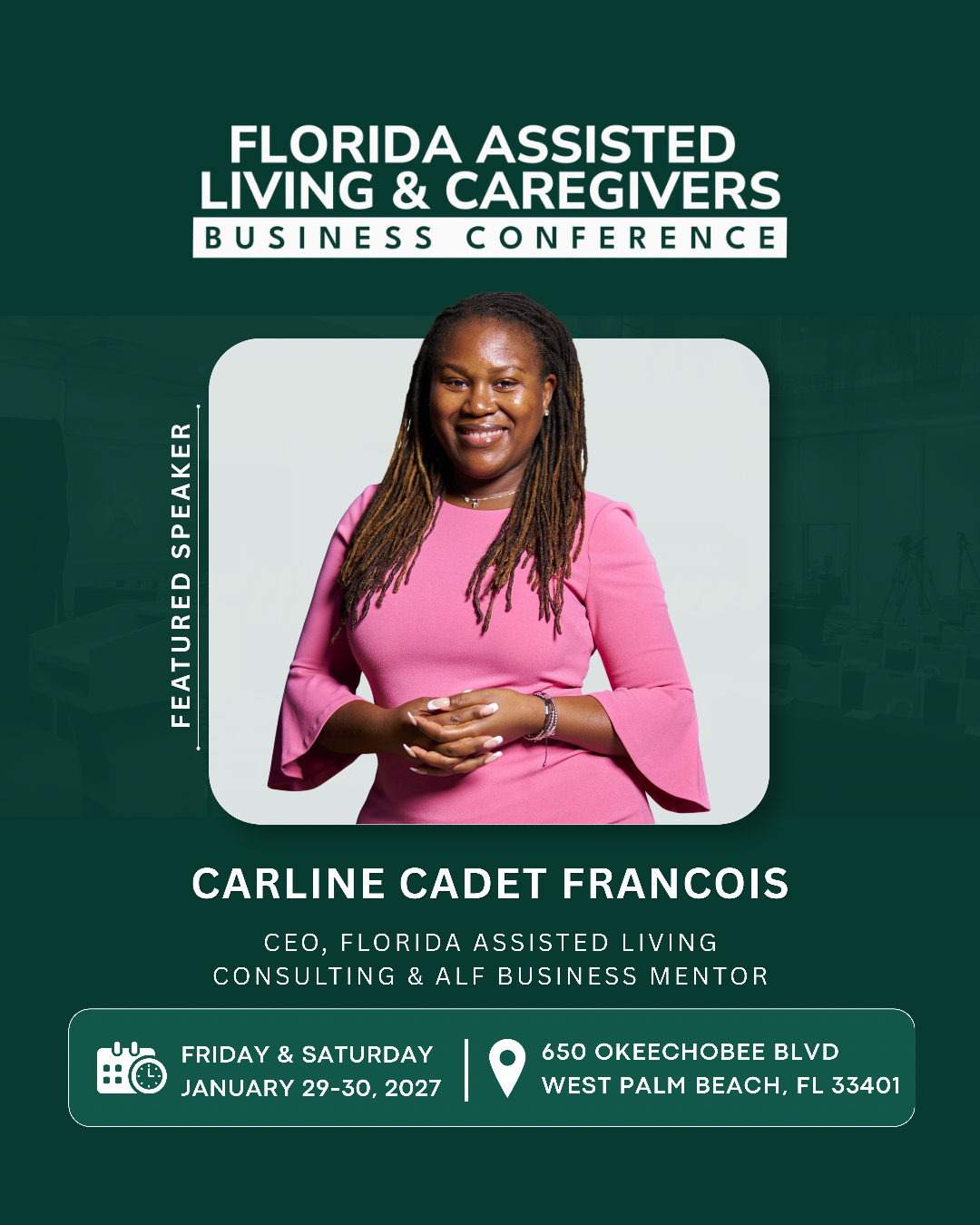
This is also why I'm so excited about the 2027 ALF Caregivers Conference.
Senior care is evolving.
Technology is evolving.
Business is evolving.
And the professionals who continue learning, building relationships, and understanding what's happening beyond their own corner of the industry will be better positioned for what's ahead.
We're bringing together professionals from across the assisted living and senior-care ecosystem to share their expertise, perspectives, and experiences.
Meet our growing list of 2027 speakers
📅 January 29–30, 2027
📍 Palm Beach County Convention Center
West Palm Beach, Florida
Before You Go
Your Next Steps?
#1 Join the ALF Thriving Circle Community — $47/month
Direct access to me, monthly coaching, replays, and a private network to help you stay on track. You’ll gain direct support, resources, and step-by-step guidance from me and a committed group of ALF CEOs. Join the Thriving Circle Community
#2 Get Your ALF CEO Millionaire Planner
This planner is more than a calendar — it’s a full roadmap with licensing steps, checklists, stats, and strategies to keep your ALF goals organized all year long. Order the Planner
#3 Secure Your Seat for the 2027 ALF Caregivers Conference
Two days of connection, resources, and transformation. The last conference completely sold out. Get Your Ticket Now
#4 Book a One-on-One Strategy Session With Me
If you're ready to get licensed the first time — always on first inspection — you can schedule a consultation and let’s build your ALF the right way. Book Your Consultation
With prosperity,
Carline Cadet Francois
CEO, Florida Assisted Living Consulting LLC

Responses