

One of the hardest questions a family can face is:
“Is it still safe for Mom or Dad to live the way they're living now?”
And there isn't always one dramatic event that gives you the answer.
Sometimes the changes are gradual.
A forgotten medication here.
An unpaid bill there.
Mom doesn't seem to be eating as much.
Dad stops going places he used to enjoy.
You visit the house and something simply feels... different.
Individually, those things can seem small.
But sometimes small changes are telling us something bigger.
So today, I want to share 7 things families and caregivers should pay attention to.
1. Changes in Medication Management
Are medications being forgotten?
Taken twice?
Running out unexpectedly?
Is the person confused about what they're taking or when they're supposed to take it?
Medication difficulties can be an important signal that additional support may be needed.
And don't simply assume someone is managing because the pill bottles are there.
Ask questions.
2. Changes Around the Home
Sometimes the home tells you things your loved one won't.
Look around.
Is unopened mail piling up?
Are bills being missed?
Is spoiled food sitting in the refrigerator?
Has housekeeping changed significantly?
Are there new burns, stains, broken items, or other signs that everyday tasks are becoming more difficult?
The goal isn't to judge.
It's to notice.
3. Changes in Eating and Nutrition
Pay attention to what is actually being eaten—not simply whether food is available.
Has there been noticeable weight loss?
Are meals regularly being skipped?
Is the refrigerator mostly empty?
Is the person relying on the same easy foods every day because cooking has become difficult?
There can be many reasons for changes in eating habits, so significant or unexplained changes should also be discussed with an appropriate healthcare professional.
4. Changes in Personal Care
Someone who was previously very particular about their appearance may begin wearing the same clothes repeatedly.
Bathing may become less frequent.
Laundry may pile up.
Grooming habits may change.
Again, one change doesn't automatically mean someone needs assisted living.
That's important.
But patterns deserve attention.
5. Falls—or a Growing Fear of Falling
Sometimes the warning isn't the fall itself.
It's what happens afterward.
Someone may stop walking as much.
Stop going outside.
Avoid the shower.
Stop attending activities.
Or begin holding onto furniture as they move around the house.
A fear of falling can quietly begin changing someone's independence and quality of life.
6. Increasing Confusion or Memory Changes
Everyone forgets things occasionally.
But repeated changes that begin interfering with everyday life deserve attention.
Getting lost in familiar places.
Repeatedly missing appointments.
Difficulty completing familiar tasks.
Increasing confusion about time or place.
Repeating the same questions frequently.
Those are not things families should simply dismiss as:
“They're getting older.”
If you're noticing new or worsening cognitive changes, speak with an appropriate healthcare professional so the person can be properly evaluated.
7. Caregiver Burnout
This one gets overlooked.
Sometimes we're so focused on the older adult that we forget to ask:
How is the caregiver doing?
If a spouse, daughter, son, relative, or friend is providing most of the care and becoming physically or emotionally exhausted, that's important too.
You can love someone deeply and still need help caring for them.
Those two things can exist at the same time.
So, Does This Mean It's Time for Assisted Living?
Every person's circumstances are different.
Someone may need additional support at home.
Another person may benefit from adult day services.
A family may need respite care.
There may be medical issues that need evaluation.
And for someone else, a different living environment may eventually become the better option.
The goal isn't to push someone into assisted living.
The goal is to recognize when the current situation may no longer be working and start having the conversation before a crisis forces the conversation for you.
Ask questions.
Talk with your loved one.
Talk with the appropriate healthcare professionals.
Learn what resources are available.
And don't be afraid to ask for help.
Come Meet Me at Broward County Caregivers’ Day
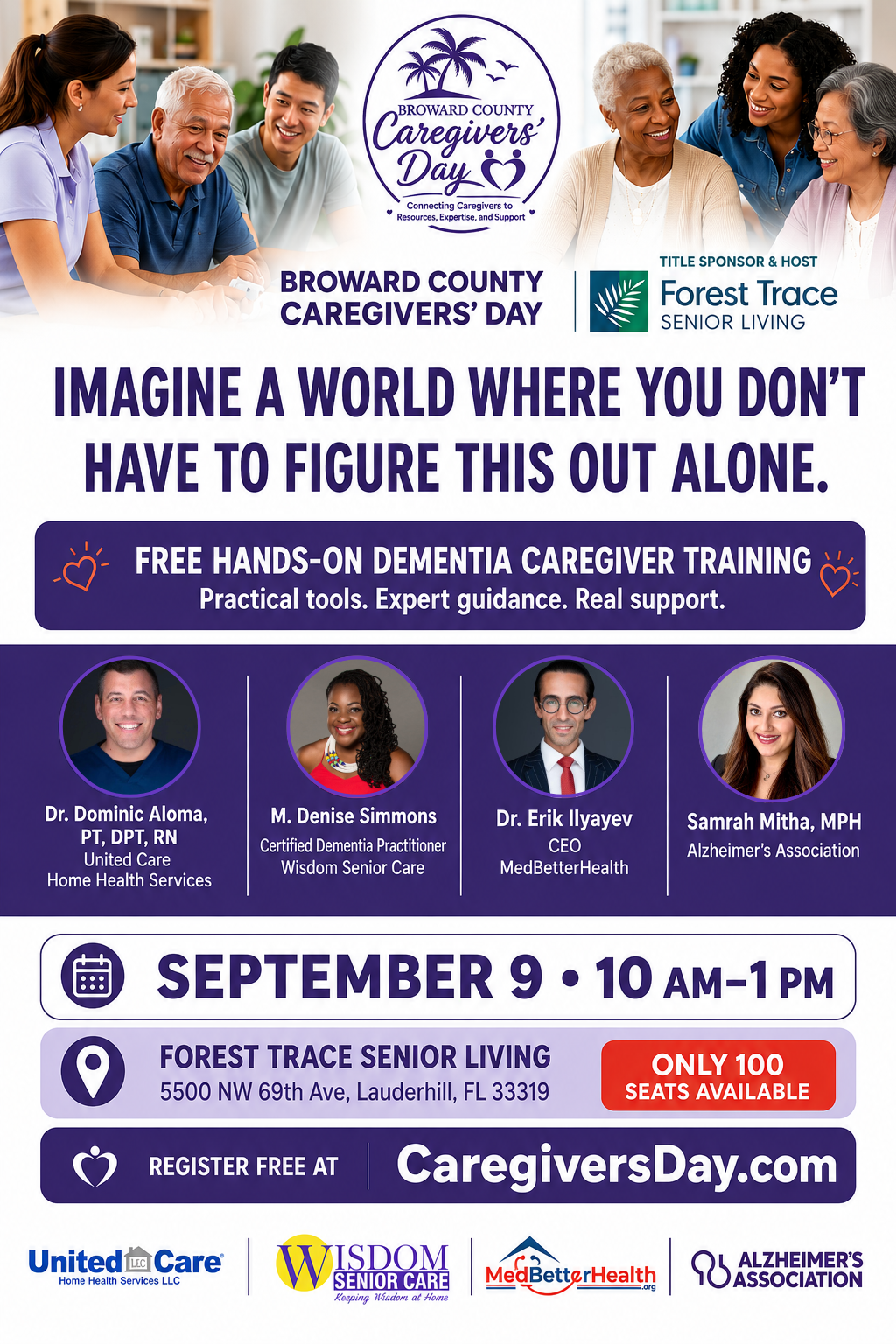
I want to personally invite you to Broward County Caregivers’ Day.
On September 9 from 10:00 AM–1:00 PM, caregivers and senior-care professionals will come together for FREE hands-on dementia caregiver training, practical tools, expert guidance, and real support.
I'm especially excited to support M. Denise Simmons of Wisdom Senior Care, who has been a wonderful supporter of our community and will be one of the featured speakers, sharing her expertise as a Certified Dementia Practitioner.
And I'll be there too!
So if you're in South Florida, come meet me. Make sure you come over and say hello when you see me.
Event Details:
📅 September 9 | 10:00 AM–1:00 PM
📍 Forest Trace Senior Living
5500 NW 69th Ave
Lauderhill, FL 33319
Registration is FREE, but only 100 seats are available.
Reserve your seat at Caregiversday.com
Whether you're caring for a family member or you work professionally with older adults, this is an opportunity to learn, connect, ask questions, and leave with practical information you can actually use.
I hope I'll see you there!
The Future of Senior Care Is Bigger Than One Profession
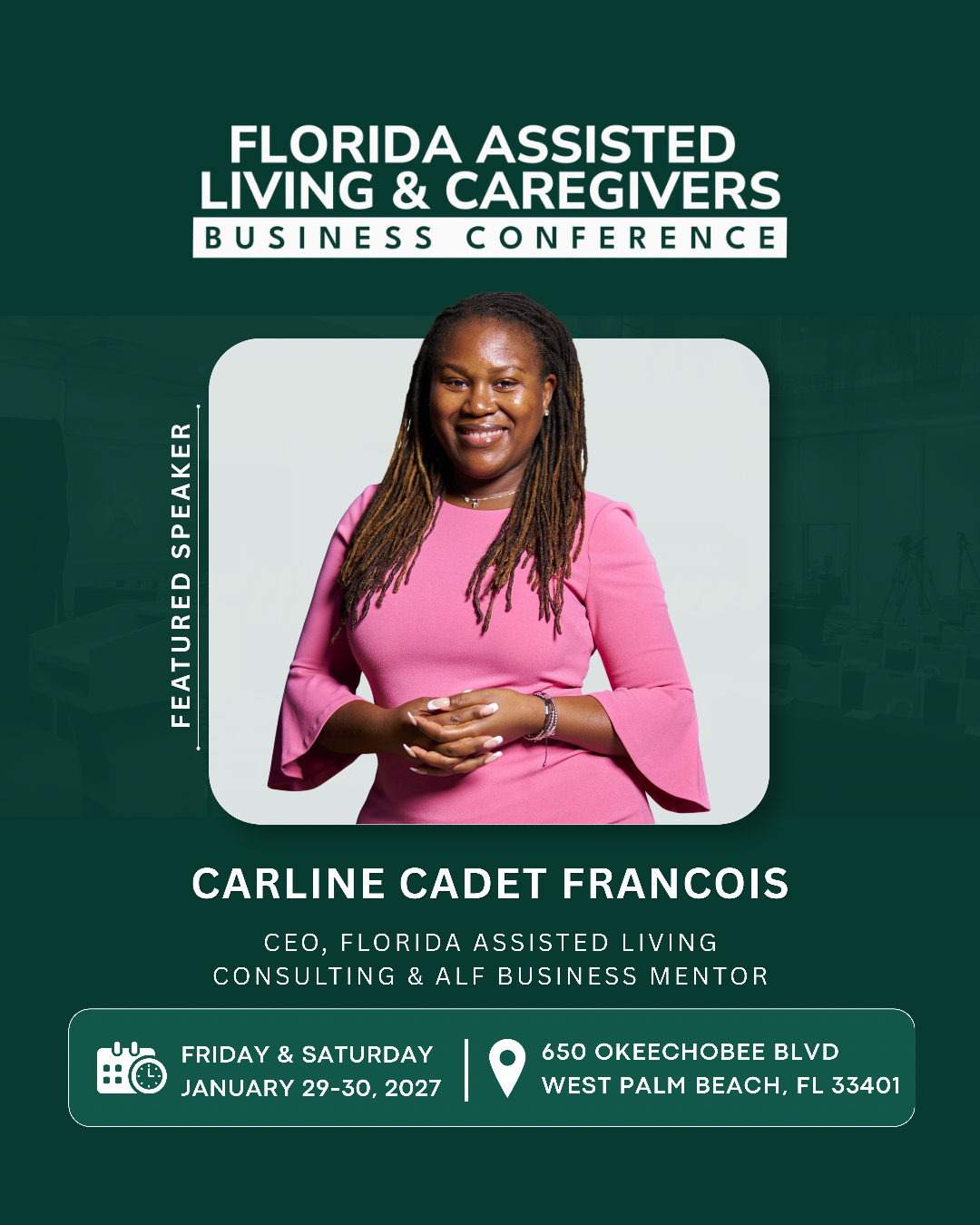
This is also why I'm so excited about the 2027 ALF Caregivers Conference.
Senior care is evolving.
Technology is evolving.
Business is evolving.
And the professionals who continue learning, building relationships, and understanding what's happening beyond their own corner of the industry will be better positioned for what's ahead.
We're bringing together professionals from across the assisted living and senior-care ecosystem to share their expertise, perspectives, and experiences.
Meet our growing list of 2027 speakers
📅 January 29–30, 2027
📍 Palm Beach County Convention Center
West Palm Beach, Florida
Before You Go
Your Next Steps?
#1 Join the ALF Thriving Circle Community — $47/month
Direct access to me, monthly coaching, replays, and a private network to help you stay on track. You’ll gain direct support, resources, and step-by-step guidance from me and a committed group of ALF CEOs. Join the Thriving Circle Community
#2 Get Your ALF CEO Millionaire Planner
This planner is more than a calendar — it’s a full roadmap with licensing steps, checklists, stats, and strategies to keep your ALF goals organized all year long. Order the Planner
#3 Secure Your Seat for the 2027 ALF Caregivers Conference
Two days of connection, resources, and transformation. The last conference completely sold out. Get Your Ticket Now
#4 Book a One-on-One Strategy Session With Me
If you're ready to get licensed the first time — always on first inspection — you can schedule a consultation and let’s build your ALF the right way. Book Your Consultation
With prosperity,
Carline Cadet Francois
CEO, Florida Assisted Living Consulting LLC


Responses